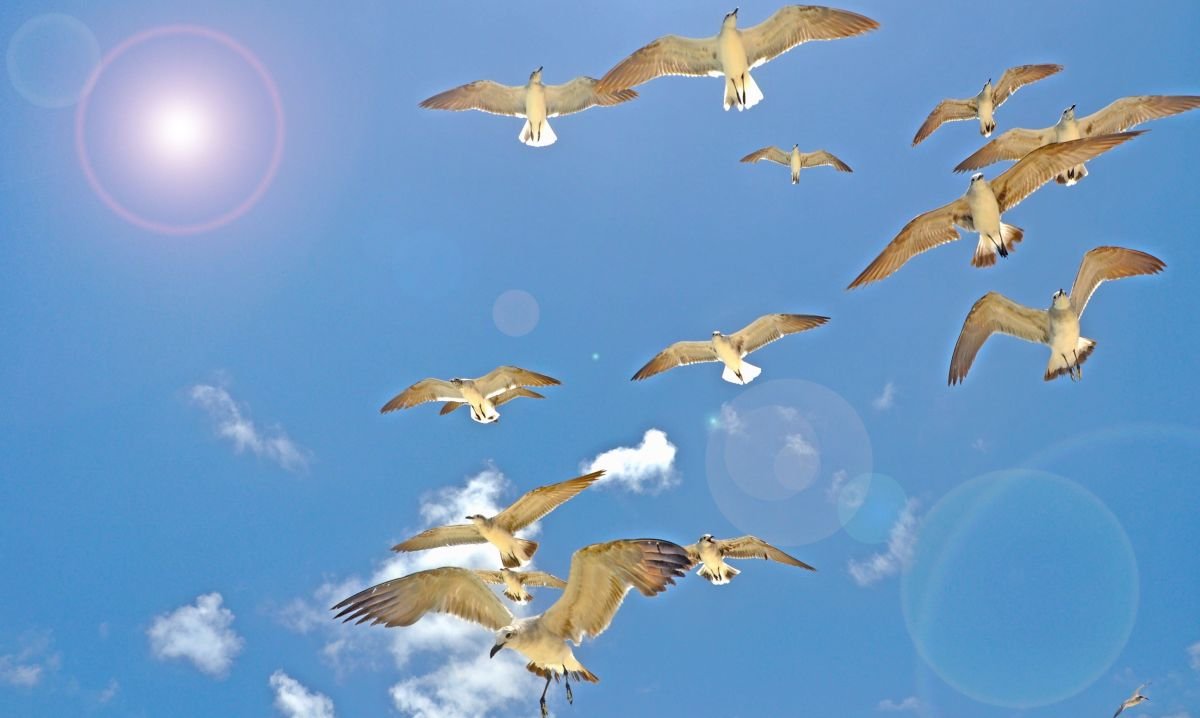
Every year, millions of birds embark on extraordinary journeys, traveling thousands of miles across continents, oceans, and deserts. From the Arctic tern’s epic pole-to-pole migration to the bar-tailed godwit’s nonstop flight across the Pacific, these feats of endurance and precision are nothing short of miraculous. But how do birds find their way during these long flights? What tools, instincts, and environmental cues guide them across vast and often featureless landscapes? Let’s dive into the fascinating science behind avian navigation.
The Sun and Stars: Celestial Navigation
Birds have an innate ability to use celestial bodies as navigational aids.
- Sun Compass: During the day, birds rely on the position of the sun to determine direction. They can account for the sun’s movement across the sky, adjusting their flight path accordingly. This ability is particularly well-documented in species like pigeons and starlings.
- Star Compass: At night, migratory birds such as warblers and thrushes use the stars to navigate. They can recognize constellations and use them to orient themselves. For example, the North Star serves as a fixed reference point for many species.
The Earth’s Magnetic Field: Nature’s GPS
One of the most remarkable aspects of bird navigation is their ability to sense the Earth’s magnetic field. This “magnetic sense” acts like an internal GPS, guiding them across vast distances.
- Magnetoreception: Birds have specialized cells in their eyes and beaks that detect magnetic fields. These cells contain a protein called cryptochrome, which reacts to magnetic forces, providing directional information.
- Magnetic Maps: Some birds, like homing pigeons, can create mental maps based on variations in the Earth’s magnetic field. This allows them to navigate even in unfamiliar territories, making adjustments as they go.
Landmarks and Visual Cues
Birds also rely on visual landmarks to navigate, especially during shorter flights or when approaching their destination.
- Geographical Features: Rivers, mountains, coastlines, and forests serve as natural landmarks. For example, geese often follow river valleys during migration, while seabirds use coastlines to guide their journeys.
- Human-Made Structures: Birds like swallows and starlings use roads, buildings, and other structures to orient themselves, particularly in urban environments.
Olfactory Navigation: The Power of Smell
Some birds use their sense of smell to navigate, especially over open water where visual cues are limited.
- Seabirds: Species like shearwaters and albatrosses can detect subtle scent gradients in the air, helping them locate feeding grounds and nesting sites.
- Homing Pigeons: Research has shown that pigeons use olfactory maps to find their way home, relying on familiar scents carried by the wind.
Innate Instincts and Genetic Programming
Migration is deeply ingrained in birds’ instincts and genetic makeup. Even young birds that have never migrated before know when and where to go.
- Genetic Maps: Birds inherit migration routes and timing from their parents. For example, cuckoos raised in the nests of other birds still manage to find their way to their ancestral wintering grounds.
- Environmental Cues: Changes in daylight, temperature, and food availability trigger migratory behavior, ensuring birds leave at the right time.
Social Learning and Flocking Behavior
Many birds migrate in flocks, relying on the experience and knowledge of older, more experienced individuals.
- Leadership: In species like geese and cranes, older birds often lead the flock, guiding younger ones along established routes.
- Safety in Numbers: Flying in flocks not only provides safety from predators but also allows birds to share navigational information, increasing the chances of a successful journey.
Adaptability and Problem-Solving
Birds are highly adaptable and can adjust their navigation strategies based on changing conditions.
- Weather Changes: Birds can sense changes in air pressure and wind patterns, allowing them to alter their flight paths to avoid storms or take advantage of favorable winds.
- Learning from Experience: Birds that migrate multiple times often refine their routes, learning from past experiences to optimize their journeys.
Challenges and Threats
Despite their incredible navigational abilities, birds face numerous challenges during migration.
- Human-Made Obstacles: Skyscrapers, communication towers, and wind turbines pose significant risks, often leading to collisions.
- Climate Change: Shifting weather patterns and habitat loss can disrupt traditional migration routes, forcing birds to adapt or face dire consequences.
Conclusion
The ability of birds to navigate during long flights is a testament to their remarkable intelligence and adaptability. By using a combination of celestial cues, magnetic fields, landmarks, and innate instincts, they can traverse vast distances with astonishing precision. Understanding how birds navigate not only deepens our appreciation for these incredible creatures but also highlights the importance of protecting their habitats and migration routes. As we continue to study avian navigation, we uncover more about the intricate and awe-inspiring world of birds.